Ułatwienia dostępu

Termin sympozjum: 10 – 11 grudnia 2025 

Partnerzy

PPNT

Sponsorzy

Informacje ws. sesji posterowej

Preferowany format posteru: pionowe A0 

Rejestracja uczestników: od godz. 8:30

Rozwieszanie posterów: podczas  rejestracji (8:30-9:00) lub w trakcie przerwy kawowej (11:05-11:30).

Miejsce: hol poziom 0.

Program sympozjum

„10 lat CZT – Centrum ludzi, idei i nauki”

Dzień I – Uroczysta część oficjalna (10. grudnia 2025)

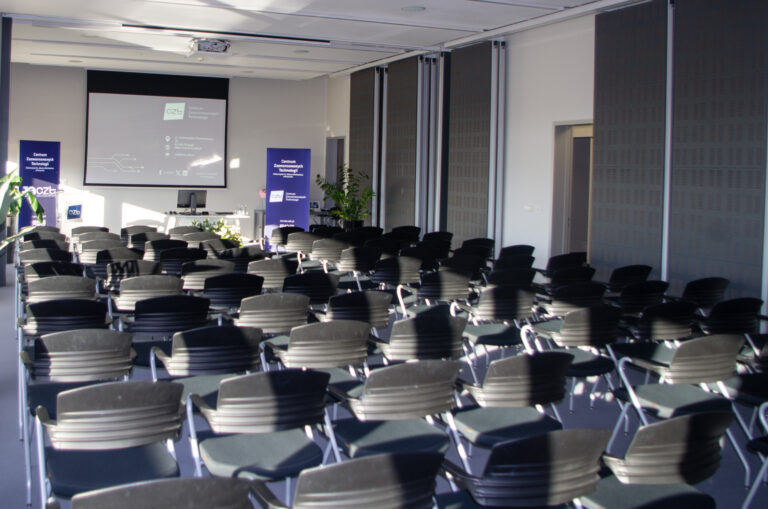
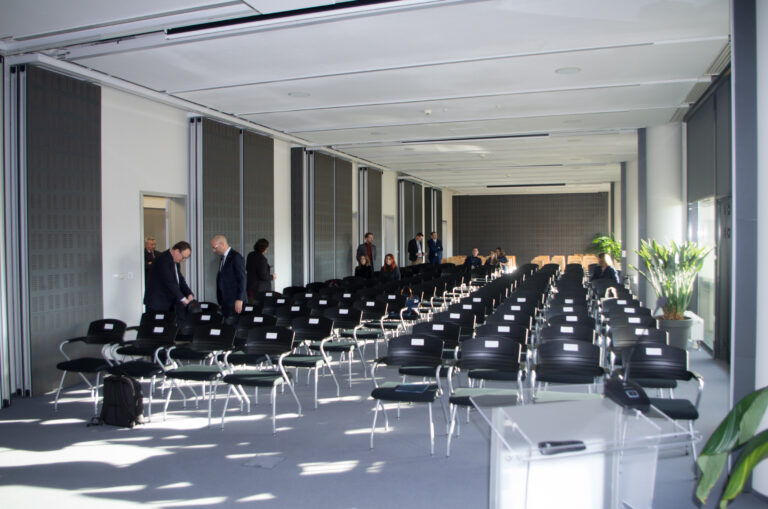
Sala 3 (pierwsze piętro), Centrum Zaawansowanych Technologii, ul. Uniwersytetu Poznańskiego 10, 61-614, Poznań.

11:00 – 11:10Prezentacja filmu: „10 lat CZT – osiągnięcia i perspektywy

11:10 – 11:20 – Otwarcie jubileuszu, prof. dr hab. Artur Stefankiewicz, Dyrektor CZT

11:20 – 12:00 – Wystąpienia i podziękowania

Prof. dr hab. Bogumiła Kaniewska, Rektor UAM

Iwona Matuszczak-Szulc, Dyrektorka Wydziału Rozwoju Miasta i Współpracy Międzynarodowej

Prof. dr hab. Krzysztof Pyrć, Prezes Zarządu FNP

Prof. dr hab. Robert Pietrzak, Prezes Polskiego Towarzystwa Chemicznego

Prof. dr hab. Marcin Hoffmann, Przewodniczący zespołu VI Rady Doskonałości Naukowej

Prof. dr hab. Bogdan Marciniec, twórca CZT, Dyrektor CZT w latach 2015-2017

Prof. dr hab. Bronisław Marciniak, Dyrektor CZT w latach 2017-2024

12:00 – 13:30 – Sesja wykładowa
Prof. dr hab. Krzysztof Matyjaszewski 
„Zaawansowane Materiały Poprzez Polimeryzację Rodnikową z Przeniesieniem Atomu (ATRP)”
Prof. dr hab. Piotr Śliwiński
„Randka w ciemnym – nauki z nieznajomą”

13:30 – 15:00 – Toast, grupowe zdjęcie, lunch + występ muzyczny zespołu Emma Jazz Combo

15:00 – Zakończenie części oficjalnej

Dzień I – Warsztaty (10. grudnia 2025)

15:00- 16:30 – Szkolenie z przygotowania posterów – Mariusz Gogól

Dzień II – Sesja Naukowa (11. grudnia 2025)

Sala 3 (pierwsze piętro), Centrum Zaawansowanych Technologii, ul. Uniwersytetu Poznańskiego 10, 61-614, Poznań.

09:00 – 11:00 – Sesja 1 – Chemia (prowadząca: Prof. UAM dr hab. Beata Dudziec)
9:00 – 9:45 Wykład plenarny – Chemia i Materiały Funkcjonalne, prof. dr hab. Dawid Pinkowicz (UJ, laureat nagrody NCN i grantu ERC)
„Coordination chemistry without metals?”

9:45  – dr Dawid Frąckowiak „Dial „M” for Mechanochchemistry: Solid-state ball milling in organic and inorganic synthesis”

9:55 – dr inż. Tomasz Sokolnicki „Synthesis and application of new silane coupling agents in tire rubber composites”

10:05 – mgr Jakub Robaszkiewicz „Green synthesis of alkoxysilanes and hydrosilanes: one-pot hydrosilylation of olefins and dehydrogenative coupling with alcohol catalyzed by a cobalt(II) complex with salicylimine ligands”

10:15 – mgr Bartłomiej Szarłan „Nickel(II) salen complexes as a cheap alternative in regioselective hydrofunctionalization of olefins”

10:25 – mgr Weronika Wachowicz „Anion-Triggered Structural Switching in Coordination Cages Based on a Flexidentate Pyridyl-β-Diketonate Ligand”

10:35 – dr Katarzyna Mituła-Chmielowiec „From Silsesquioxane Synthesis to Polymer Applications”

10:45 – mgr Aleksandra Mermela „Design, synthesis, and catalytic application of manganese complexes bearing bulky DAB ligands in the green hydroboration of ketones”

 10:55 – dr Grzegorz Markiewicz „Chirality-Assisted Self-Assembly of Low Symmetry Non-Covalent Capsules with Quantitative Diastereoisomeric Selection”

11:05–11:30 – Przerwa kawowa
11:30 – 13:30 – Sesja 2 – Biologia (prowadzący: dr hab. Dawid Bielewicz)
11:30 – 12:15 Wykład plenarny – Biologia i Nauki o Życiu , prof. UAM dr hab. Michał Bogdziewicz (UAM, laureat nagrody NCN i grantu ERC)
„Tree Reproduction in an Overheated World”

12:15 – dr Tomasz Skrzypczak „The viscoelastic properties of Nicotiana tabacum BY-2 suspension cell lines adapted to high osmolarity”

12:25 – dr Kamil Szeliski „Extracellular Vesicle Analysis by Flow Cytometry: Challenges and Opportunities”

12:35 – mgr Klaudia Ostatek „Termination at the Crossroads: Small Molecules, Factor Manipulation, and Cell Differentiation”

12:45 – dr Wiktoria Szydło „Plants, viruses and mites – a spectrum of symbiotic relationships”

12:55  – dr Rajani Gudipatti „Catalytic-Independent Regulation of ALG-1 by DPF-3: A Novel Mechanism Controlling microRNA Function in C. elegans”

13:05 – mgr Yaarob Altalii Lamin-Mediated Chromatin Organization and Its Impact on Transcriptional Programs During Epidermal Differentiation”

13:15 –mgr Agnieszka Bajer „Design and Functional Characterization of Water-Soluble Coordination Cages as Bioinspired Enzyme Models”

13:25 – 15:00 – Lunch oraz sesja posterowa
15:00 – 17:00 – Sesja 3 – Materiały (prowadzący: dr Dawid Frąckowiak)
15:00 – 15:45 Wykład plenarny – Fizyka i Inżynieria Materiałowa, prof. dr hab. inż. Krzysztof Fic (PP, laureat grantu ERC, członek Rady NCN)
„Empowering and energising the future by electrified interfaces”

15:45  – dr Cataldo Valentini „Ambipolar 2D covalent organic frameworks as cathode material for aluminum energy storage device”

15:55  – dr Myong Joon Oh „Silatrane coupling agents: a rising star in surface coating”

16:05  – mgr Kamil Hanek Organocatalytic multitasking. From ynals to different organosulfur products”

16:15  – mgr inż. Julia Głowacka „Application of Octaspherosilicates in PLA-Based Materials”

16:25  – dr Veronica Montes-Garcia „Covalent Functionalization of Ti3C2Tx MXenes: Unlocking Superior Performance in Energy Storage Applications”

16:35  – mgr Dennys Klymovych „Templating Strategies for the Design of Novel Materials for Energy Storage”

16:45  –mgr Piotr Andruszczak „Cobalt complexes with Schiff base ligands as highly active precatalysts for hydroboration of alkenes and alkynes”

16:55  – mgr Adrian Drozdowski „Broad-range, multi-excitation optical thermometry using a nanocrystal phosphor with multimodal downshifting, upconversion and persistent luminescence”